
Caustic Soda Flakes 98% and 99% — Specification and Supply
Product overview
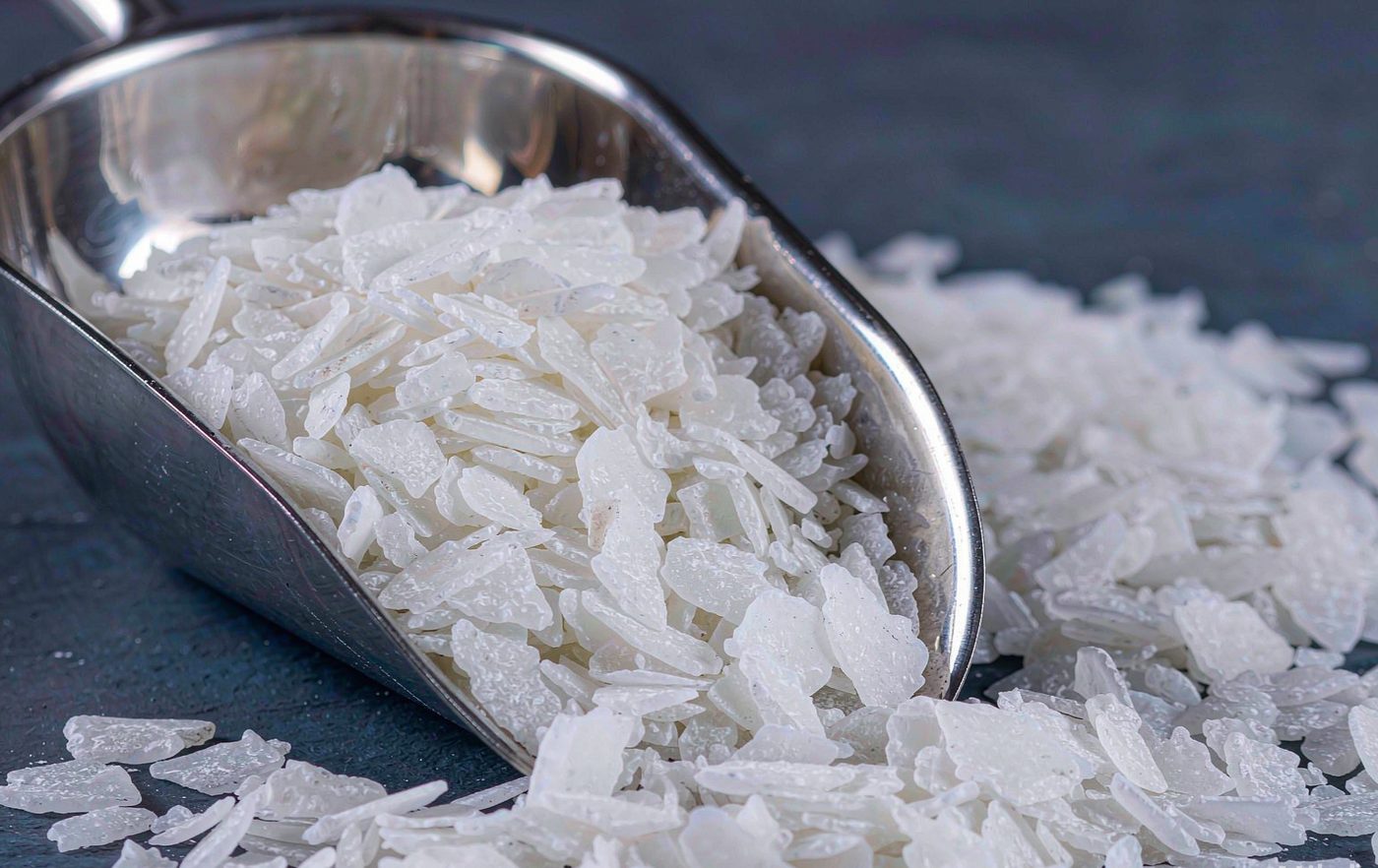
Caustic soda flakes — sodium hydroxide, NaOH — is a white, strongly alkaline solid supplied in flake form for industrial processing. It is corrosive, hygroscopic and highly soluble in water, which is why industrial buyers judge a supplier not only on chemical purity but on bag integrity, moisture protection and documentation.
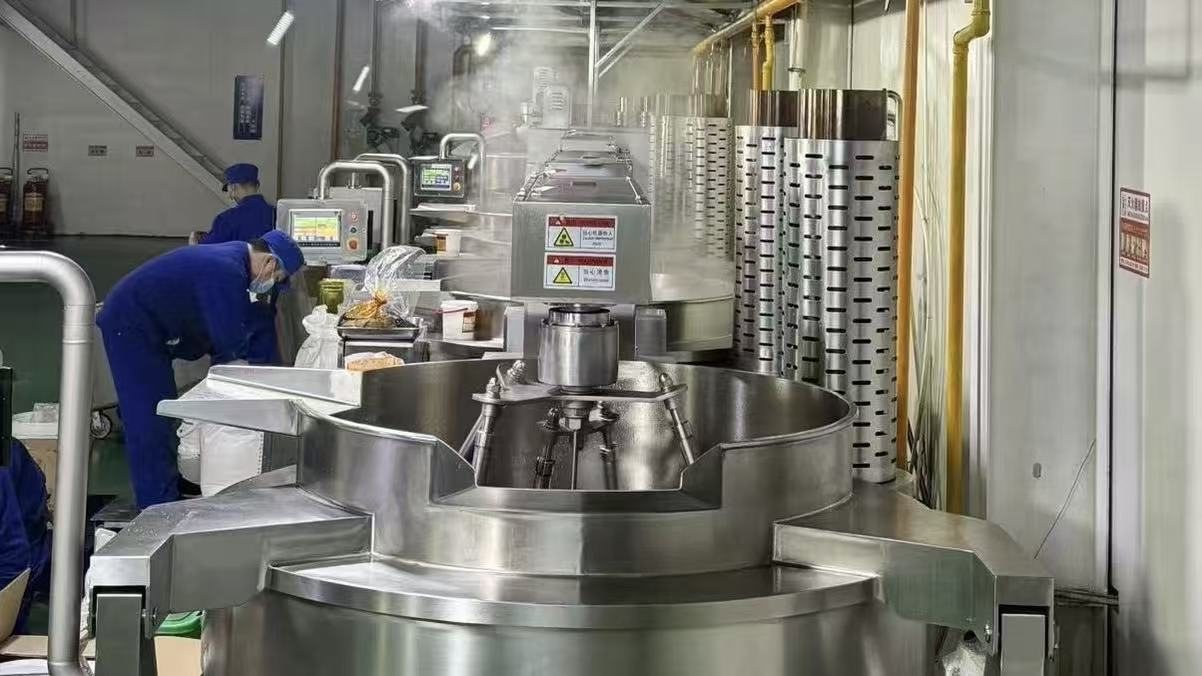
We supply flakes in two grades — 99% min as the plant's main production grade, and 98% min on request — produced at the Inner Mongolia Tianshun Alkali Industry plant in the Xilaifeng Industrial Park, Wuhai, a national chlor-alkali industry base, and shipped from Tianjin (Xingang). Our buyers are importers, distributors and industrial end users worldwide.
Also known as: lye, soda lye, sodium hydrate, white caustic, flake caustic, NaOH flakes — same chemical, CAS 1310-73-2.
Key features
- 99% min as the plant's main production grade, with 98% min available on request.
- Sealed PP/PE laminated bags that protect a hygroscopic product from moisture during transit.
- Batch Certificate of Analysis issued for every shipment, with MSDS available before you order.
- Loading plans kept inside the legal container weight for the destination market.
- Consistent packing and marking, so your warehouse team knows what arrives.
- Shelf life guidance: 12 months in sealed bags stored dry — the product is hygroscopic and absorbs moisture and CO₂ from air.
Technical specification
| Parameter | Grade 99% min (main grade) | Grade 98% min (on request) |
|---|---|---|
| Chemical name | Sodium hydroxide (caustic soda) | Sodium hydroxide (caustic soda) |
| Formula | NaOH | NaOH |
| NaOH content | ≥ 99.0% | ≥ 98.0% |
| Na2CO3 | ≤ 0.8% | ≤ 0.8% |
| NaCl | ≤ 0.05% | ≤ 0.05% |
| Fe2O3 | ≤ 0.008% | ≤ 0.008% |
| Appearance | White flakes | White flakes |
| CAS number | 1310-73-2 | 1310-73-2 |
| EINECS number | 215-185-5 | 215-185-5 |
| Molecular weight | 40.00 g/mol | 40.00 g/mol |
| HS code | 2815.11 | 2815.11 |
| UN number / class | UN 1823 / Class 8 (corrosive), PG II | UN 1823 / Class 8 (corrosive), PG II |
Physical and chemical properties
| Property | Value | Property | Value |
|---|---|---|---|
| Chemical formula | NaOH | Density | 2.13 g/cm³ |
| Molecular weight | 40.00 g/mol | Melting point | 318 °C |
| Appearance | White flakes, odourless | Boiling point | ≈ 1,390 °C |
| Solubility in water | 111 g / 100 ml at 20 °C (highly exothermic) | pH (1% solution) | ≈ 13–14 |
| Hygroscopicity | Absorbs moisture and CO₂ from air — keep bags sealed | Flammability | Non-flammable solid |
Independently tested, March 2026
A production sample was tested by the Tianjin Product Quality Inspection Technology Research Institute (CMA- and CNAS-accredited) under report TQT03-1051-2026. All items passed GB/T 209-2018 with margin:
- NaOH content 99.1% (limit ≥ 98.0%)
- Sodium carbonate 0.3% (limit ≤ 0.8%)
- Sodium chloride 0.01% (limit ≤ 0.05%)
- Iron oxide 0.0006% (limit ≤ 0.008%)
- Appearance: white, lustrous solid — Pass
Sample received 19 March 2026, report issued 26 March 2026. The full report is available with your enquiry, and its authenticity can be verified with the issuing institute.
Flakes, pearls or liquid — which form fits your process?
All three are the same chemical (NaOH); only the physical form differs. We specialise in flakes — the most common form in international trade — but the comparison helps you specify correctly:
| Flakes (what we supply) | Pearls | Liquid (50%) | |
|---|---|---|---|
| Typical assay | 98–99% | ≥ 99% | 48–50% (rest is water) |
| Handling | Easy to bag, ship and store long-distance | Free-flowing, low dust, suits automated dosing | Needs heated tanks; crystallises when cold |
| Freight efficiency | High — you ship almost pure product | High | Low — you pay freight on water |
| Best for | Importers, distributors, general industrial use | Plants with closed dosing systems | Large local users with tank storage |
If your process specifically needs pearls or liquid, tell us in your enquiry — we will confirm what can be arranged before you commit.
Applications
Caustic soda flakes are used as a process chemical rather than a consumer product. Typical applications for our export grades:
Water and effluent treatment
pH adjustment, neutralisation of acidic wastewater and precipitation of heavy metals in municipal and industrial plants.
Soap and detergents
Saponification of fats and oils — the base reaction for bar soap and a wide range of cleaning formulations.
Textile processing
Mercerising of cotton for strength and lustre, plus scouring and dye-levelling in blended fabrics.
Pulp and paper
Kraft pulping chemistry, delignification and process pH control in paper mills.
Alumina and metals
Bayer-process digestion of bauxite for alumina, and surface preparation of zinc, copper and steel.
Petroleum refining
Caustic washing to remove acidic impurities (mercaptans, naphthenic acids) from refinery streams and drilling-mud pH control.
Chemical manufacturing
Neutralisation and pH control in the production of sodium salts, soaps, biodiesel and organic intermediates.
Food processing
On a food-grade basis: olive curing, cocoa processing, fruit and vegetable peeling — see the food-grade note below.
Food-grade supply
The plant holds a Food Additive Production Licence (SC20115030302021) covering sodium hydroxide, valid to May 2028 — so food-grade material for food processing use can be supplied on the right documentation basis. If your market or process requires food-grade caustic soda, say so in your enquiry and the offer, COA and certificates will be prepared accordingly.
Quality control
Each production batch is sampled and analysed at the plant before packing, and the results are issued as a Certificate of Analysis covering NaOH content, carbonate, chloride and iron. Independent verification already exists: in March 2026 the Tianjin Product Quality Inspection Technology Research Institute tested our flakes and every item passed GB/T 209-2018. The MSDS for both grades is available on request before you place an order, and third-party inspection can be arranged at load port if your procurement process requires it. More detail on quality control and export documents.
Storage and safe handling
- Keep it dry. Caustic soda flakes are hygroscopic and absorb moisture and CO₂ from air — store sealed bags in a dry, ventilated warehouse, off the floor.
- Shelf life: 12 months in unopened, sealed bags stored dry. Once a bag is opened, reseal and use promptly.
- PPE: chemical-resistant gloves, goggles or face shield and protective clothing — the product is corrosive (Class 8).
- Dissolving: always add flakes to water, never water to flakes, and add slowly with stirring — dissolution is highly exothermic.
- Segregation: never store or stow together with acids.
- Full handling guidance is in the MSDS, available with your enquiry before you order.
Packaging and delivery
| Packing | Container | Typical net weight |
|---|---|---|
| 25 kg PP/PE bags, loose loaded | 20' FCL | 25 MT (1,000 bags) |
| 25 kg PP/PE bags, palletised | 20' FCL | 22 MT |
| 1 MT jumbo bags | 20' FCL | 20 MT (20 bags) |
| 25 kg PP/PE bags | 40' FCL | 27 MT (weight-limited) |
Standard basis is FOB Tianjin (Xingang), with CFR and CIF quoted for your destination port on request. Loading photos, container number and seal number are shared before departure. Full packing detail is on packing and container loading.
Related information
Questions buyers ask about this product
What is the difference between 99% and 98% caustic soda flakes?
Both are the same product. The 99% grade has a higher minimum NaOH content and is the grade produced as standard; 98% min is available on request. Impurity limits for either grade are stated in the specification sheet, and the batch COA is the governing document.
Do you supply a Certificate of Analysis with the shipment?
Yes. Each production batch is sampled and analysed, and the Certificate of Analysis travels with the shipping documents. Independent verification also exists: a March 2026 test by the Tianjin Product Quality Inspection Technology Research Institute passed all items against GB/T 209-2018, and the report is available with your enquiry.
How many tonnes fit in one container?
A 20-foot container normally takes 25 MT of 25 kg bags, or 20 MT of 1 MT jumbo bags. A 40-foot container is weight-limited at about 27 MT. We confirm the loading plan with your order.
Is the product dangerous to ship?
Caustic soda flakes are classified UN 1823, Class 8 (corrosive). They ship in sealed bags with the standard dangerous goods documentation, and the MSDS gives full handling instructions.
Can the bags carry our own brand?
Bag marking and buyer-branded packaging can be discussed for confirmed orders. Tell us what you need printed and we will confirm feasibility with the plant.
Do you supply food-grade caustic soda?
Yes. The plant holds a Food Additive Production Licence (SC20115030302021) covering sodium hydroxide, valid to May 2028. Mention the food-grade requirement in your enquiry so the offer and documents are prepared on the right basis.
How should the product be stored, and how long does it keep?
Store sealed bags in a dry, ventilated warehouse off the floor. Shelf life is 12 months in unopened bags; the flakes are hygroscopic and cake if exposed to humid air. Reseal opened bags and use them promptly.
Do you also supply caustic soda pearls or liquid?
Our plant specialises in flakes, the most common form in international trade. If your process needs pearls or liquid caustic soda, tell us in your enquiry and we will confirm what can be arranged.
What payment terms do you accept?
Terms are agreed per order. Both telegraphic transfer and letter of credit can be considered; the confirmed terms are stated on the proforma invoice.
Request a quotation
Send us your required grade, quantity and destination port. We reply with an indicative price, packing options and a specification sheet — normally within one working day.